Stop Guessing.
Start Knowing
Identify your real skin type and transform your skin.
Get Your InstantSkin Care Routine
Your skin can look fine one week and suddenly become dry, sensitive, or uncomfortable the next. Sometimes the problem isn’t a new skin type. Your skin barrier may simply need more attention.
The skin barrier is your body’s outer protective layer. It helps keep moisture in while protecting your skin from environmental irritants. When this barrier isn’t functioning as well as it should, products that once felt comfortable may suddenly sting, your face may feel unusually tight, or dry patches may start appearing.
Recognizing these changes early can help you simplify your routine and give your skin the support it needs.
What Is the Skin Barrier?
The outermost layer of your skin is called the stratum corneum. You can think of it as a protective wall.
Skin cells form part of this wall, while natural lipids such as ceramides, cholesterol, and fatty acids help hold everything together. This structure reduces water loss and provides protection against external factors.
A healthy barrier helps your skin retain moisture and stay comfortable.
When it becomes disrupted, your skin may lose water more easily. It can also become more reactive to products and environmental conditions.
Several things can contribute to barrier problems, including harsh cleansing, excessive exfoliation, unsuitable skincare products, environmental conditions, and overusing active ingredients.
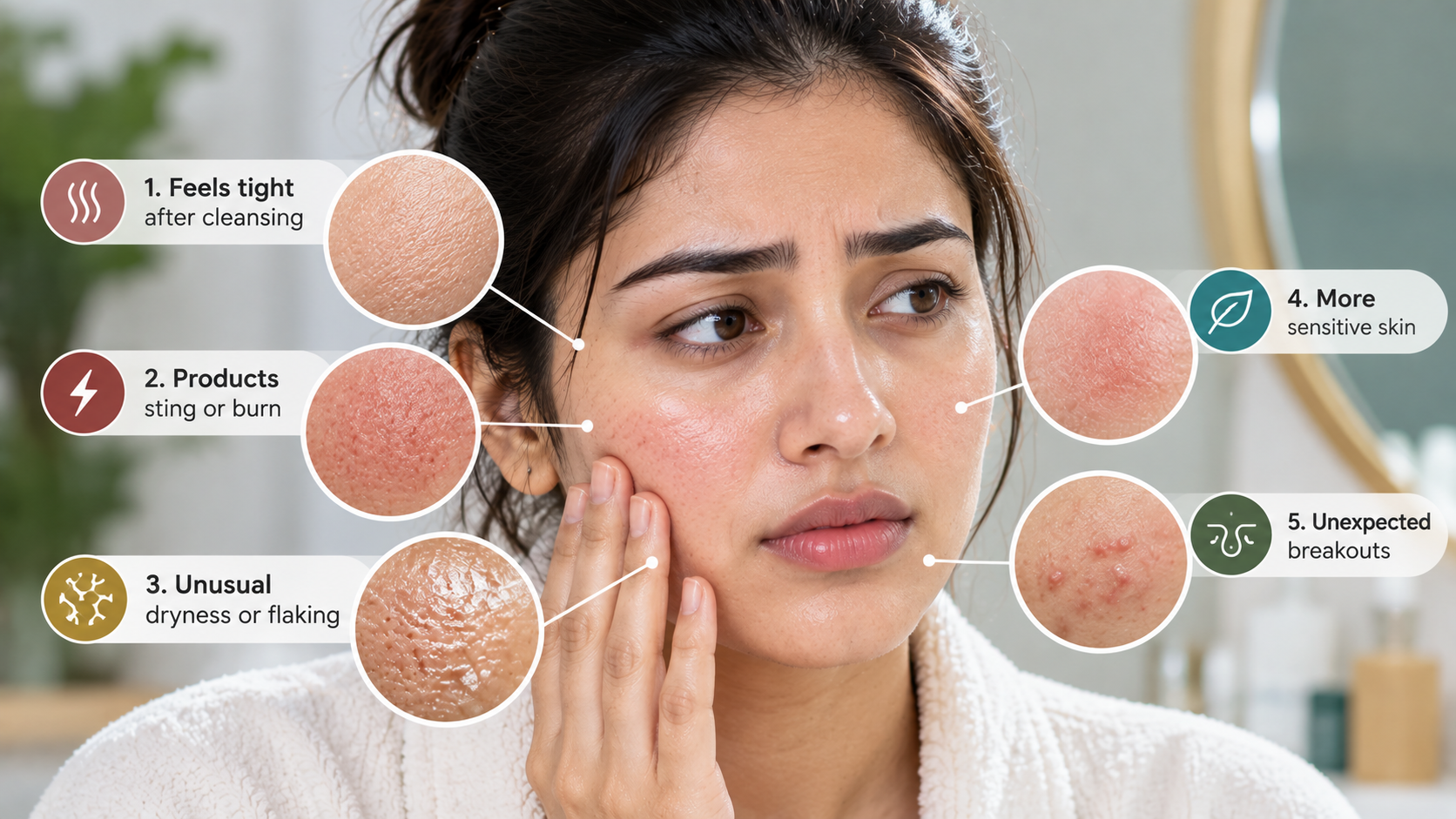
Here are five signs worth paying attention to.
1. Your Skin Feels Tight After Cleansing
Your face shouldn’t feel extremely tight every time you wash it.
If your skin regularly feels stretched or uncomfortable immediately after cleansing, your cleanser or cleansing routine may be too aggressive for your skin.
Some people associate that tight feeling with cleanliness, especially if they have oily skin. But removing as much oil as possible isn’t the goal of cleansing.
Your skin naturally produces oils that contribute to its protective barrier.
Washing too frequently or using a harsh cleanser may remove more surface oil than necessary.
Pay attention to how your face feels after washing. Clean skin should not automatically mean uncomfortable skin.
2. Products Suddenly Sting or Burn
Have you used the same moisturizer for months only to find that it suddenly starts stinging?
That change deserves attention.
When the skin barrier is compromised, your skin may become more reactive. Products that previously caused no problems can suddenly feel uncomfortable.
You might notice burning, stinging, itching, or redness after applying skincare.
This doesn’t necessarily mean the product itself has suddenly become bad. Your skin’s condition may have changed.
Recently introduced products should also be considered. Strong exfoliating acids, retinoids, or combinations of multiple active ingredients can sometimes cause irritation when introduced too quickly or used excessively.
Persistent or severe reactions should be discussed with a qualified dermatologist rather than repeatedly experimenting with new products.
3. You’re Experiencing Unusual Dryness or Flaking
Dry patches are another common sign that your skin may need attention.
You may notice flaking around your nose, cheeks, mouth, or other areas. Your skin might also feel rough despite regularly applying moisturizer.
When the skin barrier isn’t retaining water effectively, moisture can escape more easily. This can leave your skin feeling dry or dehydrated.
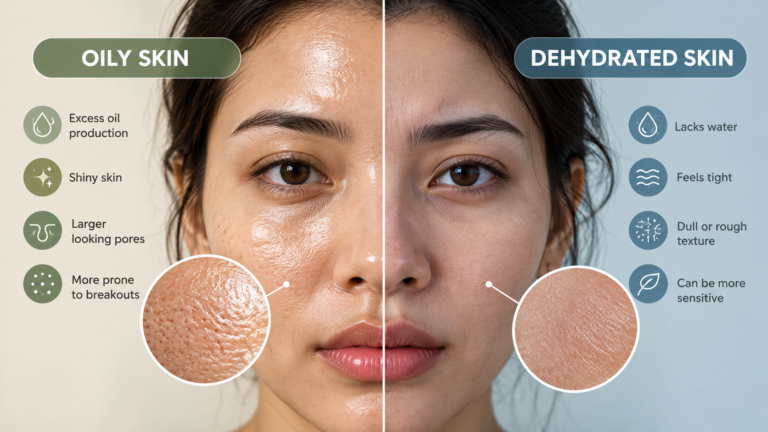
Importantly, this can happen even if you naturally have oily skin.
Oily skin and dehydrated skin aren’t opposites. Your skin can produce plenty of sebum while still lacking water.
If your normally oily face suddenly develops dry patches and feels tight, don’t automatically respond by using stronger cleansers. Consider whether your current routine could be contributing to dehydration or irritation.
4. Your Skin Has Become More Sensitive
Sensitivity can appear in different ways.
Your skin may become red more easily. Weather changes may bother it more than usual. Products containing ingredients you previously tolerated might suddenly feel uncomfortable.
You might also notice sensitivity after shaving, cleansing, exercising, or spending time outdoors.
Some people naturally have sensitive skin, so increased sensitivity doesn’t automatically mean the skin barrier is damaged.
The key is noticing changes from your normal skin behaviour.
If your skin was previously comfortable but has recently become much more reactive, think about what changed.
Did you introduce several new products?
Have you increased exfoliation?
Are you using retinol more frequently?
Did you switch cleansers?
Sometimes simplifying your routine can make it easier to identify what may be causing irritation.
5. You’re Getting Unexpected Breakouts
Breakouts can happen for many reasons, including hormones, excess oil, clogged pores, certain products, and other factors.
However, sudden breakouts alongside redness, dryness, tightness, or irritation may indicate that your overall skincare routine deserves another look.
People sometimes respond to breakouts by adding more products.
They introduce exfoliating acids, stronger cleansers, scrubs, spot treatments, and other active ingredients at the same time.
That can make it difficult to know which product is helping and which one is making your skin uncomfortable.
If your breakouts are accompanied by other signs of irritation, piling additional products onto your routine may not be the best first step.
What Can Affect Your Skin Barrier?
Skin barrier problems don’t always come from one obvious cause.
Your everyday habits can influence how your skin behaves.
Common factors may include:
- Over cleansing
- Harsh facial cleansers
- Frequent physical scrubbing
- Over exfoliation
- Introducing too many active ingredients together
- Environmental exposure
- Dry weather
- Hot water
- Using products that don’t suit your skin
Even a good skincare ingredient can cause problems if it is used incorrectly or too frequently for your individual skin.
More skincare isn’t always better skincare.
What Should You Do If Your Skin Barrier Needs Attention?
Start by looking at your existing routine.
If you’re using several exfoliants, serums, retinoids, masks, and treatments, consider whether every product is currently necessary.
A basic routine can often be much easier to manage:
Gentle cleanser → Moisturizer → Sunscreen
Your moisturizer can help support hydration, while daily sunscreen helps protect your skin from UV exposure.
Avoid aggressively scrubbing away flaky skin or repeatedly washing your face because it feels oily.
Give your skin time and pay attention to how it responds.
If symptoms are persistent, painful, severe, or worsening, speak with a dermatologist. Skin conditions such as eczema, rosacea, acne, and contact dermatitis can sometimes produce symptoms that people mistakenly attribute to a damaged skin barrier.
Understanding Your Skin Comes First
The internet is full of skincare routines, but someone else’s routine isn’t necessarily right for you.
Your skin type affects how different cleansers, moisturizers, sunscreens, and other products feel on your skin.
Before adding more products, it helps to understand whether your skin is oily, dry, combination, or sensitive and how it normally behaves.
If you’re unsure where to begin, the SkinSense skin assessment asks a series of simple questions designed to help you better understand your skin type.
Take the SkinSense Assessment: https://skinsense.io
It can provide a useful starting point before you build or adjust your skincare routine.
Final Thoughts
Your skin doesn’t need to be perfect to be healthy.
But sudden tightness, unusual sensitivity, persistent dryness, stinging, or unexpected breakouts can be signs that something in your routine needs attention.
Instead of immediately adding another treatment, look at the basics first.
Cleanse gently. Keep your skin moisturized. Use sunscreen. Be careful about introducing too many active ingredients at once.
Most importantly, pay attention to changes in your own skin rather than following a routine simply because it works for someone else.