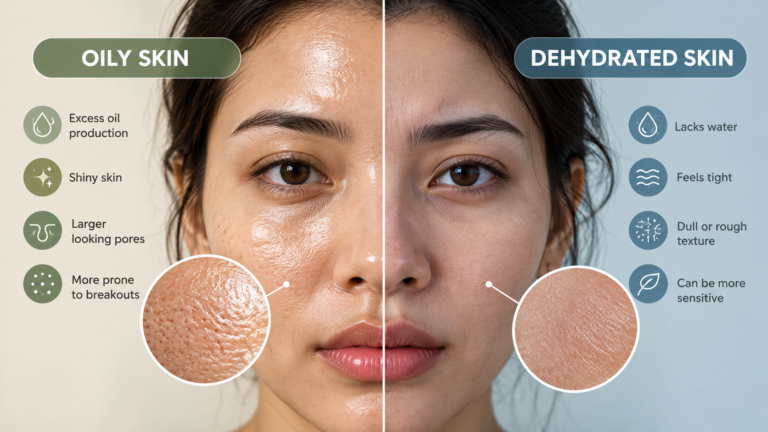
Stop Guessing.
Start Knowing
Identify your real skin type and transform your skin.
Get Your InstantSkin Care Routine
Cleansing may be the simplest step in a skincare routine, but it is also one of the easiest to get wrong.
Your skin comes into contact with sweat, excess oil, sunscreen, makeup, dust, and other impurities throughout the day. Leaving this buildup on your face can make your skin feel uncomfortable and may contribute to clogged pores.
A good cleansing routine helps remove that buildup while preparing your skin for the products you apply next. The goal, however, is not to make your face feel completely stripped of oil. Healthy cleansing is about keeping skin clean without unnecessarily disturbing its natural balance.
What Does a Facial Cleanser Actually Do?
A facial cleanser helps remove substances that accumulate on the surface of your skin.
These may include:
- Excess sebum
- Sweat
- Dirt and environmental debris
- Sunscreen
- Makeup
- Skincare product residue
Water alone may not effectively remove all of these, particularly oil based substances and some sunscreen or makeup formulations.
That is where a cleanser becomes useful.
Cleansers contain ingredients known as surfactants. In simple terms, these help water interact with oil and dirt so they can be washed away more effectively.
Different cleansers use different formulations, which is why one face wash can leave your skin feeling comfortable while another may leave it tight or irritated.
Why Is Cleansing Important for Healthy Skin?
Cleansing creates a clean foundation for the rest of your skincare routine.
During the day, your skin naturally produces oil and comes into contact with the environment. If you wear sunscreen, makeup, or other products, these also remain on your skin until they are removed.
Proper cleansing helps clear this buildup.
It is particularly important at night because you are removing what has accumulated on your face throughout the day before going to bed.
However, more cleansing does not necessarily mean healthier skin. The cleanser you choose and how frequently you use it matter too.
Cleansing Helps Remove Excess Oil
Sebum is the natural oil produced by your skin. It plays an important role in protecting and lubricating the skin, so oil itself is not something you need to eliminate completely.
People with oily skin simply tend to produce more of it.
When excess oil mixes with dead skin cells and other material on the skin, pores may become more prone to congestion.
Regular cleansing can remove excess surface oil without requiring you to aggressively scrub your face.
If you have oily skin, it can be tempting to wash your face repeatedly whenever shine appears. This may leave your skin feeling stripped or uncomfortable.
The aim should be balance rather than removing every trace of oil.
It Removes Sunscreen and Makeup
Daily sunscreen is an important part of protecting your skin from ultraviolet radiation, but it also needs to be removed properly at the end of the day.
The same applies to makeup.
Depending on the products you use, a single gentle cleanse may be sufficient. Heavier, long wearing, or water resistant products may sometimes require more thorough removal.
Going to bed without properly removing makeup, sunscreen, and the day’s buildup can leave residue sitting on the skin overnight.
A consistent evening cleansing routine makes sure you start the night with a clean face.
Cleansing Prepares Your Skin for the Next Steps
Think about the order of a basic skincare routine:
Cleanser → Moisturizer → Sunscreen in the morning
or
Cleanser → Moisturizer in the evening
Other products may be added depending on your individual needs.
Starting with clean skin removes surface buildup before you apply your next product. This makes your skincare routine more practical and avoids simply layering moisturizer or other products over makeup, sweat, and excess oil.
You do not need a complicated ten step routine. For many people, getting these basic steps right is more useful than constantly adding new products.
Can You Cleanse Your Face Too Much?
Yes.
Cleansing is beneficial, but over cleansing can become counterproductive.
Washing too frequently or using a harsh cleanser may remove more surface oil than necessary and leave the skin feeling dry, tight, or irritated.
Signs that your cleansing routine may be too aggressive include:
- Tightness immediately after washing
- Burning or stinging
- Persistent dryness
- Flaking
- Increased sensitivity
- Redness or discomfort
Your face does not need to feel “squeaky clean” for your cleanser to be effective.
If your skin feels uncomfortable every time you wash it, that may be a reason to reconsider the cleanser you are using or how frequently you cleanse.
How Often Should You Cleanse Your Face?
There is no perfect cleansing schedule that applies to every person.
Many people cleanse in the morning and evening, while others may find that their skin does better with a different routine.
Your skin type, lifestyle, climate, exercise habits, and the products you use can all influence how often cleansing feels appropriate.
Evening cleansing is particularly useful for removing sunscreen, makeup, oil, and buildup from the day.
You may also want to cleanse after heavy sweating or exercise rather than leaving sweat sitting on your face for an extended period.
What matters is paying attention to how your skin responds.
Choosing a Cleanser Based on Your Skin Type
The best cleanser is not necessarily the strongest one. It is one that effectively cleans your skin while leaving it comfortable.
Oily Skin
If you have oily skin, you may prefer a lightweight gel or foaming cleanser that removes excess oil without leaving your face extremely tight.
Avoid assuming that stronger always means better.
Dry Skin
Dry skin usually benefits from a gentler approach.
Creamy or hydrating cleansers may feel more comfortable because the goal is to clean the skin without worsening dryness.
Combination Skin
Combination skin can be oily around the forehead, nose, and chin while feeling normal or dry elsewhere.
A balanced, gentle cleanser may work better than aggressively targeting only the oily areas.
Sensitive Skin
If your skin reacts easily, consider simple, gentle formulations and pay attention to how your skin responds after cleansing.
Persistent redness, burning, itching, or irritation should not simply be ignored.
Do You Need to Double Cleanse?
Double cleansing involves cleansing the face twice, often beginning with an oil based cleanser or cleansing balm followed by a water based facial cleanser.
It can be useful for some people, particularly when removing heavy makeup or water resistant sunscreen.
But it is not automatically necessary for everyone.
If your regular cleanser effectively removes your daily products and your skin feels clean and comfortable afterward, adding another cleansing step may not provide much benefit.
Your routine should be based on what your skin needs rather than what happens to be trending online.
Know Your Skin Before Building Your Routine
Choosing a cleanser becomes easier when you understand your skin type.
Someone with oily skin may have very different cleansing needs from someone with dry or sensitive skin. At the same time, skin type is not the only consideration. Dehydration, sensitivity, acne, weather, and the products you already use can influence how your skin behaves.
If you are unsure whether your skin is oily, dry, combination, or somewhere in between, start by understanding your skin before filling your routine with new products.
The SkinSense skin assessment asks a series of simple questions to help you better understand your skin type and make more informed skincare choices.
🌐 Take the SkinSense Assessment: https://skinsense.io
Final Thoughts
Cleansing is not about scrubbing your face until every trace of natural oil disappears.
It is about removing excess oil, sweat, sunscreen, makeup, and daily buildup while keeping your skin comfortable.
A suitable cleanser, used appropriately, gives the rest of your skincare routine a clean starting point. Pay attention to how your skin feels after washing. If it regularly feels tight, irritated, or excessively dry, your current approach may need adjusting.
Start with the basics: understand your skin, cleanse it gently, moisturize appropriately, and protect it with sunscreen.