Stop Guessing.
Start Knowing
Identify your real skin type and transform your skin.
Get Your InstantSkin Care Routine
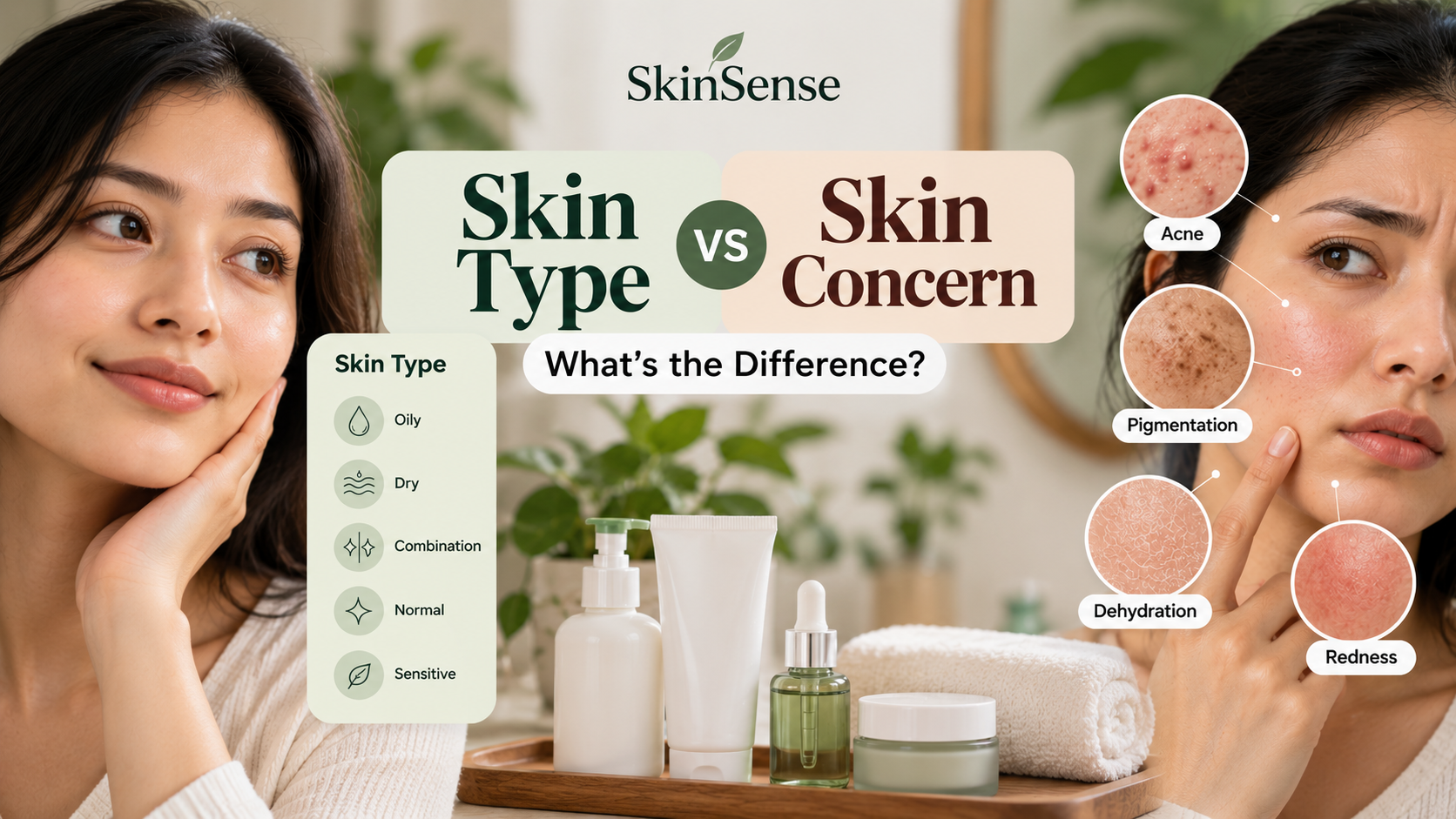
Skin Type vs Skin Concern: What’s the Difference?
Buying skincare becomes much easier when you understand what your skin actually needs. One of the most common sources of confusion is the difference between skin type and skin concern.
You might describe your skin as oily because you experience frequent breakouts. Someone else might assume they have dry skin because their face suddenly feels dehydrated. These signs can overlap, but they do not necessarily describe the same thing.
Your skin type describes the general way your skin behaves, particularly when it comes to oil production and overall balance. A skin concern is a specific issue you want to address, such as acne, pigmentation, dehydration, redness, or fine lines.
Understanding this distinction can help you choose skincare products more carefully and avoid building a routine around the wrong problem.
What Is a Skin Type?
Your skin type refers to the general characteristics and behaviour of your skin.
Oil production is one of the main factors used when describing skin type. Genetics can play an important role, although age, hormones, climate, lifestyle, and skincare habits may also affect how your skin behaves.
The commonly discussed skin types are:
Oily skin
Dry skin
Combination skin
Normal skin
Sensitive skin is also frequently included in skin type classifications, although sensitivity can overlap with other types. For example, someone can have oily and sensitive skin at the same time.
Knowing your skin type gives you a starting point for deciding what kind of cleanser, moisturizer, sunscreen, and other products may feel suitable.
What Is Oily Skin?
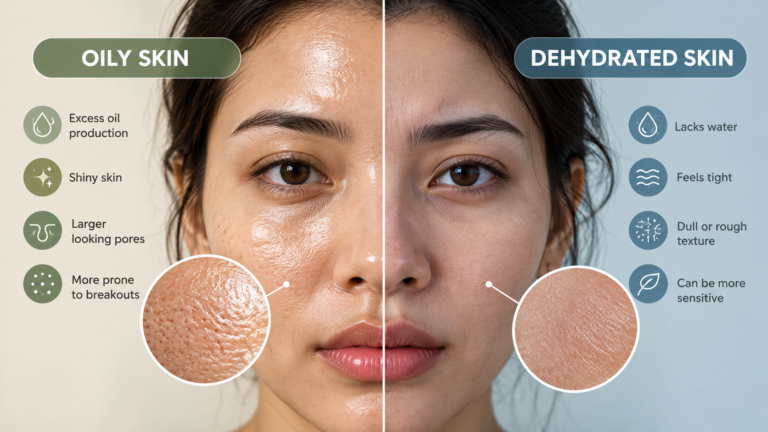
Oily skin generally produces more sebum than needed.
Sebum is the natural oil produced by your sebaceous glands. It helps protect and lubricate the skin, so oil itself is not a problem. However, excess sebum can make the face appear shiny and may contribute to clogged pores in some people.
Common characteristics of oily skin include:
Visible shine across much of the face
Oil returning relatively quickly after cleansing
Larger looking pores
A tendency toward blackheads or clogged pores
Makeup becoming shiny during the day
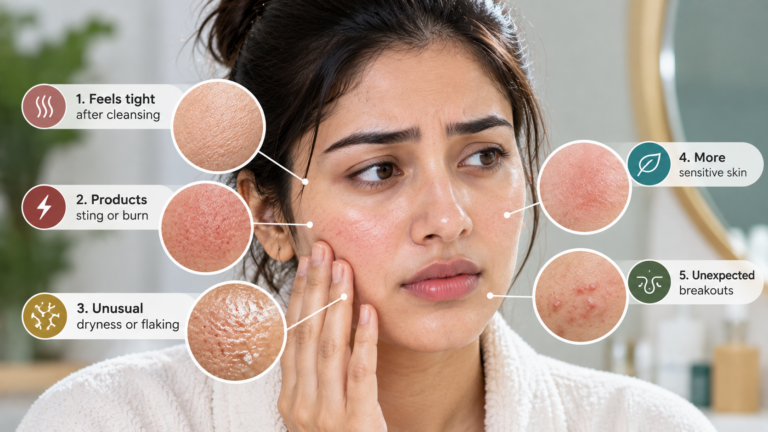
People with oily skin sometimes try to remove as much oil as possible using strong cleansers or frequent washing. This can leave the skin feeling uncomfortable.
Having oily skin also does not mean you should automatically skip moisturizer. The goal should be to choose products that suit your skin rather than trying to eliminate every trace of natural oil.
What Is Dry Skin?
Dry skin generally produces less sebum and may have difficulty maintaining the level of comfort and protection that natural oils help provide.
It may feel:
- Tight
- Rough
- Flaky
- Less supple
- Uncomfortable after cleansing
Dry skin is different from dehydrated skin, which is an important distinction we will discuss later.
Someone with a naturally dry skin type may need a gentler cleanser and a moisturizer that provides sufficient hydration and supports the skin barrier.
What Is Combination Skin?
Combination skin has characteristics of more than one skin type across different areas of the face.
A common pattern is an oily T zone, which includes the forehead, nose, and chin, combined with cheeks that are normal or dry.
Someone with combination skin may notice shine around the nose by afternoon while the cheeks remain relatively comfortable or even feel dry.
This can make skincare selection more challenging because an aggressive product designed for oily skin may feel too harsh on the drier areas.
What Is Normal Skin?
Normal skin generally describes skin that has a relatively balanced level of oil and moisture.
It may have:
- Minimal excessive shine
- Limited persistent dryness
- Relatively comfortable texture
- Few regular reactions to basic skincare products
Normal skin still requires care. Sunscreen, cleansing, and appropriate moisturizing remain relevant even when you don’t regularly experience excessive oiliness or dryness.
Your skin can also change over time, so having normal skin today doesn’t guarantee it will always behave exactly the same way.
What Is a Skin Concern?
A skin concern is different from your underlying skin type.
It is a particular issue or change you want to understand or manage.
Common skin concerns include:
- Acne and breakouts
- Blackheads
- Pigmentation
- Uneven skin tone
- Dehydration
- Redness
- Sensitivity
- Fine lines
- Rough texture
- Dullness
- Visible pores
- Sun related changes
One person can experience several skin concerns at the same time.
For example, someone may have oily skin with acne and pigmentation.
Another person may have dry skin with sensitivity and fine lines.
The skin type provides the foundation, while the concerns describe specific issues affecting the skin.
Skin Type vs Skin Concern: A Simple Example
Imagine two people who both experience acne.
The first person has oily skin. Their face becomes shiny throughout the day, particularly around the forehead, nose, and chin.
The second person has dry skin. Their face frequently feels tight and flaky, but they also experience breakouts.
Both people share the same skin concern: acne.
But they do not necessarily share the same skin type.
Giving both people exactly the same skincare routine simply because they have acne could ignore important differences in how their skin behaves.
This is why identifying only your biggest concern may not be enough when building a routine.
Can Oily Skin Be Dehydrated?
Yes, and this is a good example of why skin type and skin concern should not be treated as the same thing.
Oiliness relates to sebum. Dehydration relates to water.
Someone can produce plenty of oil while their skin still lacks water.
An oily but dehydrated face may look shiny while simultaneously feeling tight or uncomfortable.
This can sometimes happen when someone repeatedly uses harsh cleansers, over exfoliates, or follows a routine that doesn’t suit their skin.
Seeing shine and immediately assuming your skin needs stronger oil removal can therefore be misleading.
Your skin may be oily by type while dehydration is an additional concern.
Can Your Skin Type Change?
Skin type is relatively stable compared with many temporary skin concerns, but it isn’t completely fixed for life.
Age can influence oil production. Hormonal changes may affect how oily your skin becomes. Climate and seasonal conditions can also change how your face feels.
Someone may notice increased oiliness during hot and humid weather and greater dryness during colder conditions.
Your skincare habits can also influence the way your skin appears and feels.
This is why understanding your skin should involve observing its behaviour over time rather than making a decision based on one particularly oily or dry day.
Can Skin Concerns Change?
Yes.
Skin concerns can appear, improve, worsen, or disappear depending on many factors.
You may experience breakouts during one period and pigmentation during another. Your skin may become temporarily dehydrated after changing your routine. Increased sun exposure can create new concerns. A product that irritates your skin may cause temporary redness or sensitivity.
This means your routine may need adjustment even when your basic skin type hasn’t changed significantly.
You don’t necessarily need to replace your entire skincare routine whenever a new concern appears.
First understand what has changed and why.
Why Does the Difference Matter When Choosing Skincare?
Many skincare products are marketed around individual concerns.
You will see products for acne, pigmentation, pores, dullness, fine lines, and dozens of other issues.
But choosing products based only on the concern can overlook your skin’s basic needs.
Suppose you have acne but also naturally dry and sensitive skin. Using an aggressive routine designed only to remove oil could leave your skin uncomfortable.
Similarly, someone with oily skin who experiences dehydration may assume that moisturizer will make the problem worse and stop using it completely.
Understanding both your skin type and your concerns gives you a better framework for evaluating products.
Instead of asking only:
“What product is good for acne?”
A more useful question may be:
“What approach is suitable for acne while considering my oily, dry, combination, or sensitive skin?”
That additional context matters.
Skin Type Should Guide Your Basic Routine
Your basic skincare routine does not need to contain a large number of products.
For many people, the foundation consists of:
Cleanser → Moisturizer → Sunscreen
Your skin type can help guide the texture and formulation you choose within these categories.
Someone with oily skin may prefer lighter products, while someone with dry skin may find richer moisturizing formulations more comfortable.
People with easily irritated skin may need to be more careful when introducing fragrances, exfoliants, retinoids, or other potentially irritating ingredients.
Once the basic routine suits your skin, specific concerns can be addressed more thoughtfully.
Skin Concerns Can Guide Additional Products
After establishing the basics, you can consider whether a specific concern requires additional attention.
For example, someone concerned about acne may consider products designed for clogged pores and breakouts. Someone concerned about pigmentation may explore ingredients used to address uneven skin tone. A person interested in signs of aging may consider retinoids or other appropriate skincare options.
This does not mean you need a separate product for every concern.
Adding too many active ingredients at once can make your routine difficult to manage and may increase the chance of irritation.
Start with the concerns that matter most to you and introduce products carefully.
Avoid Diagnosing Every Skin Problem Yourself
Understanding your skin type can help you make everyday skincare decisions, but an online assessment or skincare guide is not a replacement for medical diagnosis.
Persistent acne, severe irritation, unexplained rashes, painful skin, significant pigmentation changes, or ongoing redness may require evaluation by a qualified dermatologist.
Some medical skin conditions can look similar to ordinary skincare concerns.
If something is persistent, worsening, painful, or unusual for your skin, professional assessment is more appropriate than continuously experimenting with new products.
How Can You Better Understand Your Skin?
Start by observing your skin rather than focusing only on the product you want to buy.
Ask yourself:
- How oily does my skin normally become?
- Does my face regularly feel dry or tight?
- Are some areas oily while others remain dry?
- Does my skin react easily to products?
- What concerns am I experiencing right now?
- Have these concerns always been present, or are they recent?
Separating these questions helps you distinguish your baseline skin behaviour from a specific concern that may have developed later.
Take the SkinSense Skin Assessment
If you are unsure whether your skin is oily, dry, combination, or somewhere in between, SkinSense can help you better understand your skin.
The SkinSense assessment asks a series of simple questions about how your skin looks, feels, and behaves.
Instead of choosing skincare based only on trends or someone else’s routine, start by learning more about your own skin.
Take the SkinSense Assessment: https://skinsense.io
Final Thoughts
Skin type and skin concern are connected, but they are not interchangeable.
Your skin type describes the general behaviour of your skin, while a skin concern describes a particular issue you are experiencing or want to address.
You might have oily skin with dehydration. Dry skin with acne. Combination skin with pigmentation. Sensitive skin with fine lines.
Understanding both sides gives you a clearer picture of what your skin may need.
Before buying another cleanser, serum, moisturizer, or trending skincare product, start with a simpler question:
What is my skin type, and what is my actual skin concern?
That distinction can make building a sensible skincare routine much easier.