Stop Guessing.
Start Knowing
Identify your real skin type and transform your skin.
Get Your InstantSkin Care Routine
Retinol is one of the most well known ingredients in modern skincare. It is commonly used to improve the appearance of fine lines, uneven skin tone, acne and skin texture. When used correctly, it can become a useful part of a skincare routine.
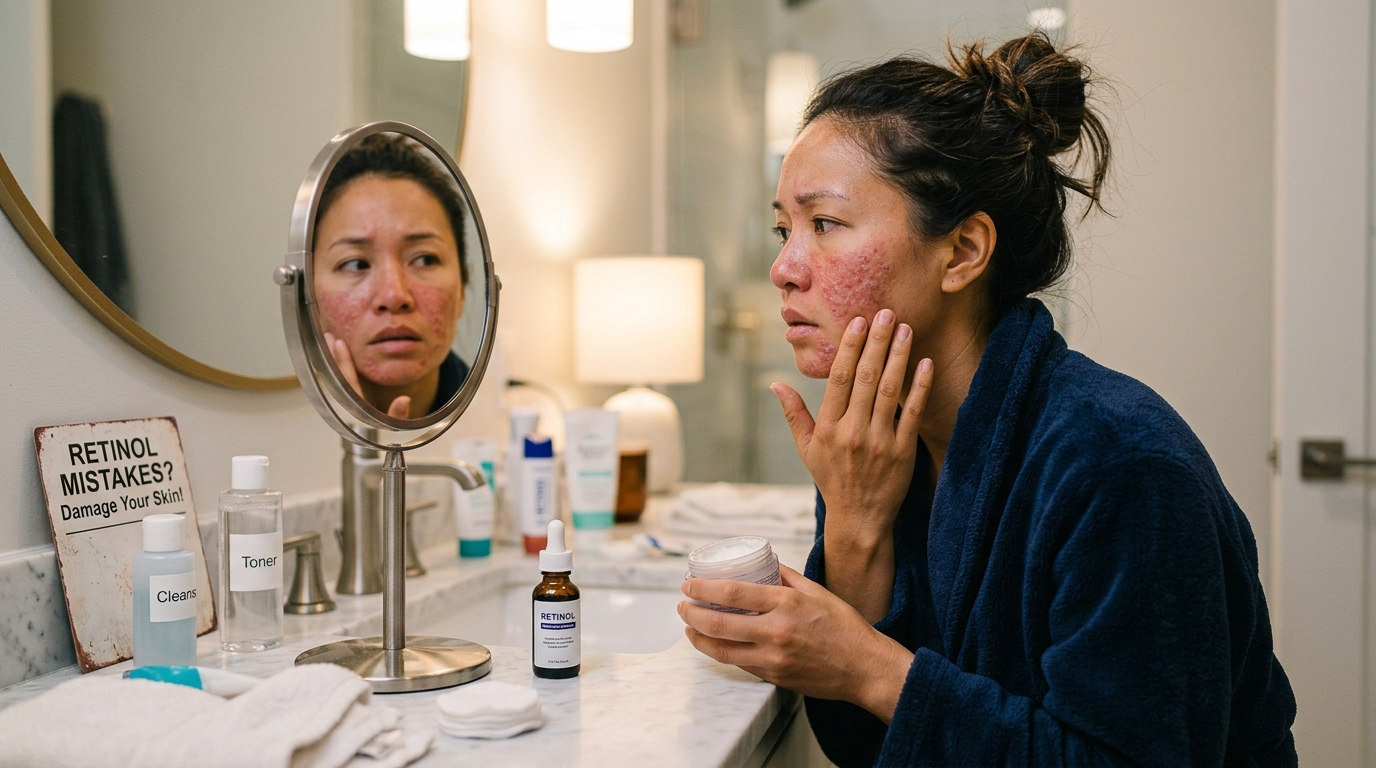
But retinol is also an active ingredient that can cause irritation, especially when you are new to it or use it incorrectly.
Redness, dryness, peeling, burning and increased sensitivity are some of the problems people may experience when they introduce retinol too quickly or combine it with other irritating products.
The good news is that many retinol mistakes are avoidable.
Here are some of the most common mistakes to watch out for.
1. Starting With Retinol Too Frequently
One of the biggest mistakes is assuming that retinol needs to be used every night to work.
If you have never used retinol before, applying it daily can be too much for your skin.
Retinol affects the way skin cells develop and can initially cause irritation. Your skin needs time to adjust.
A better approach is to introduce it gradually. Depending on the product and your skin, starting a few nights per week may be more appropriate than using it every night from the beginning.
Once your skin becomes accustomed to it, frequency can potentially be increased based on your tolerance and professional guidance.
2. Using Too Much Product
More retinol does not mean better or faster results.
Using a large amount can increase the chance of irritation without providing additional benefits.
For most facial applications, only a small amount is needed. Follow the instructions provided with your specific product and avoid applying excessive layers.
Retinol is an ingredient where consistency matters more than quantity.
3. Applying Retinol to Wet Skin
Applying certain active ingredients to damp skin can increase irritation.
After cleansing, allow your face to dry before applying retinol, particularly if you are new to the ingredient or have sensitive skin.
This small change can make the application more comfortable for some people.
If your dermatologist has given you different instructions, follow their advice.
4. Using Retinol With Too Many Active Ingredients
A common skincare mistake is combining retinol with several other strong active ingredients at the same time.
For example, someone might use retinol alongside exfoliating acids, benzoyl peroxide and other treatments without considering the total irritation their skin is receiving.
This can lead to dryness, redness and peeling.
You do not necessarily need to avoid every other active ingredient while using retinol. The issue is how the products are combined and how your skin responds.
If you are using multiple treatments, introduce them carefully rather than changing everything at once.
5. Forgetting Moisturiser
Some people avoid moisturiser because they believe it will reduce retinol’s effectiveness.
That is not generally the case.
Retinol can cause dryness and irritation, especially during the adjustment period. A suitable moisturiser can help support the skin barrier and improve comfort.
If your skin is acne prone or oily, choose a lightweight moisturiser that suits your skin rather than skipping moisturisation altogether.
In some cases, people use a moisturiser before and after retinol to reduce irritation. This approach is sometimes called the sandwich method.
6. Skipping Sunscreen
Sunscreen is an important part of any daytime skincare routine, particularly when using retinoids.
Retinoid use can make the skin more sensitive to irritation from sunlight, while UV exposure itself contributes to premature skin ageing and pigmentation.
Use a broad spectrum sunscreen during the day and follow the product’s instructions for reapplication.
Remember that using retinol at night does not replace daytime sun protection.
7. Expecting Results Overnight
Retinol is not an instant fix.
Some people stop using it after a few days because they do not see an obvious improvement. Others increase the amount because they believe stronger application will produce faster results.
Neither approach is ideal.
Skin changes take time. The timeline can vary depending on the reason you are using retinol, the product concentration and your individual skin.
Consistency and tolerance are more important than trying to force quick results.
8. Using Retinol on Already Irritated Skin
If your skin is already red, peeling, sunburned or damaged, adding retinol may increase discomfort.
Retinol is not something you need to apply simply because it is part of your routine.
If your skin barrier is irritated, it may be better to focus on gentle cleansing, moisturisation and sun protection until the skin settles.
Once your skin has recovered, retinol can be reintroduced gradually if it is appropriate for you.
9. Applying Retinol Around Sensitive Areas
The skin around the eyes, corners of the nose and lips can be particularly sensitive.
Applying retinol too close to these areas can cause dryness or irritation.
Unless your specific product is designed for those areas and your dermatologist has recommended its use there, avoid getting retinol directly into the eyes or on sensitive mucosal areas.
Use care when applying the product to your face.
10. Using the Wrong Retinol Product for Your Skin
Not all retinol products are the same.
They can vary in concentration, formulation and intended use. A product that works well for one person may be too irritating for another.
People with sensitive skin may need a different approach from someone who has already been using retinoids for years.
Instead of choosing a product simply because it has a high percentage or is popular online, consider what your skin actually needs.
11. Ignoring the Difference Between Retinol and Prescription Retinoids
Retinol is a type of retinoid, but it is not the same as every retinoid used in dermatology.
Prescription retinoids can be stronger and may be recommended for specific skin conditions.
This distinction matters because advice for one retinoid cannot automatically be applied to another.
If you are considering a prescription retinoid for acne or another skin concern, discuss the appropriate treatment with a dermatologist.
12. Continuing Despite Severe Irritation
A little dryness or mild irritation can occur when starting retinol, but severe or persistent irritation should not simply be ignored.
If your skin becomes very red, painful, swollen, severely itchy or develops significant burning or peeling, stop and seek appropriate medical advice.
Increasing your retinol use despite a strong reaction will not necessarily make your skin adjust faster.
Your skin’s response should guide how quickly you introduce an active ingredient.
13. Using Retinol Without Considering Pregnancy
Retinoids require special consideration during pregnancy.
People who are pregnant or planning pregnancy should discuss retinoid use with their healthcare professional rather than assuming that every retinol product is appropriate.
If you are pregnant, trying to conceive or unsure about whether a product is suitable, speak with your doctor before continuing or starting retinoid skincare.
14. Changing Products Too Often
If you start one retinol product and immediately switch to another because you do not see results within a week or two, you may create unnecessary irritation.
Give your routine enough time to evaluate how your skin responds, unless you experience a concerning reaction.
Changing several products simultaneously also makes it difficult to identify which product is responsible for improvement or irritation.
15. Following Social Media Advice Without Checking the Source
Retinol is frequently discussed on social media, but skincare advice designed for one person may not be suitable for everyone.
Someone else’s concentration, frequency and routine may be completely different from yours.
Before copying a retinol routine, consider your skin type, existing products, skin concerns and any medications or treatments you are using.
Professional advice becomes particularly valuable if you have persistent acne, sensitive skin, pigmentation concerns or previous reactions to active ingredients.
How to Use Retinol More Safely
If retinol is suitable for your skin, a simple routine can make the adjustment period easier.
Start with a product appropriate for your needs and follow its instructions.
Apply a small amount to clean, dry skin at night. Introduce it gradually rather than immediately using it every night.
Follow with a suitable moisturiser.
During the day, use broad spectrum sunscreen.
Avoid introducing several new active ingredients at the same time. If irritation develops, reduce frequency or pause the active ingredient and allow your skin to recover.
If you are unsure about the right concentration or frequency, a dermatologist can help you determine an approach based on your skin.
Final Thoughts
Retinol can be a valuable skincare ingredient, but using more does not make it better.
Starting too frequently, applying too much, combining several irritating ingredients, skipping moisturiser and ignoring sunscreen are some of the most common mistakes that can leave your skin irritated.
The goal is not to make your skin tolerate the strongest possible routine. The goal is to find an approach that your skin can tolerate consistently.
If you are new to retinol, start carefully, pay attention to how your skin responds and avoid copying complicated routines from social media.
And if you have persistent irritation or are unsure whether retinol is suitable for you, professional guidance can help you choose a safer and more appropriate approach.